Category Archives: Geek

It Don’t Matter If You’re Black Or White

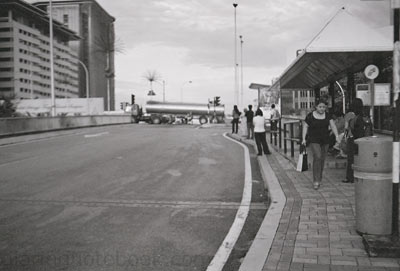
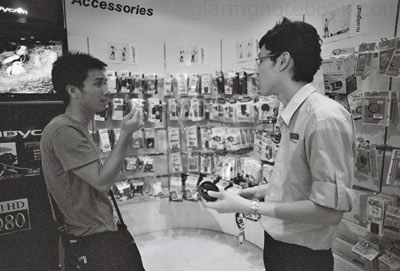
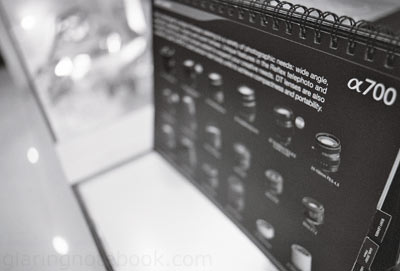
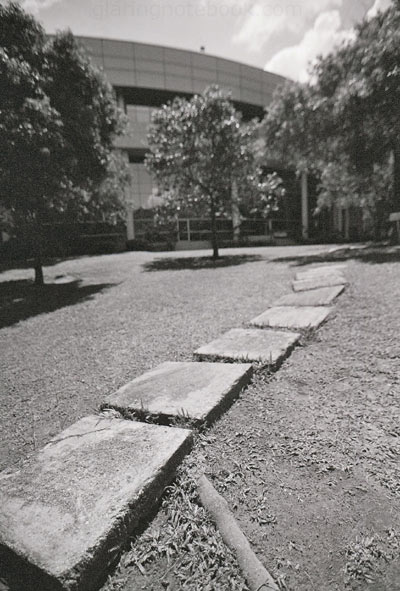
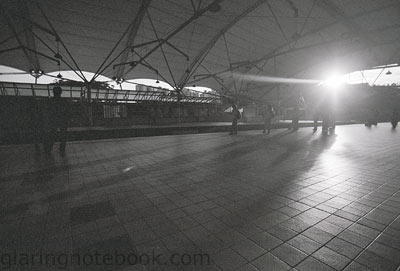
Shots from the Minolta Dynax 7, with Kodak BW 400 CN C-41 black-and-white film. None edited for levels or anything!


Gotta love the subtle tonality. 17mm F2.8 on full-frame!


Same, 17mm F2.8 also. Keeps a fair bit of tone despite the high contrast!


Vivitar 24mm F2.0 DIY Tilt-Shift.


Sony 20mm F2.8.


Sony 28mm F2.8.


8 multiple exposures… should’ve kept it at 4 for simplicity.

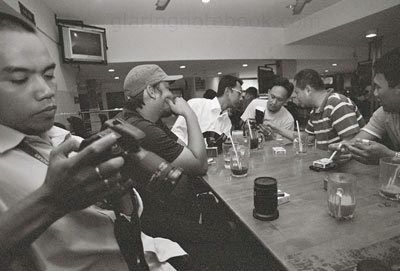
And we cut to the teh tarik session for East Sider kysham!


17mm F8. Click for big version.


Minolta 24-85mm F3.5-4.5 at 50mm F4.5. Yes, that’s the Minolta 200mm F2.8G HS APO “White Torchlight” in the picture.


Tokina 20-35mm F3.5-4.5 at 20mm F3.5.


And this, this was from a most beautiful lens indeed.


No prizes for guessing since so many people were there to see it heh.


Gotta love how the light falloff happens! It’s amazingly sharp at the point of focus even wide open. Click for big version.

It’s A Zeiss!


And now, to document my latest addition – the Carl Zeiss Jena Flektogon 35mm F2.4 MC M42 lens!


It only has the DDR coating, but I pimped it with a Sony Carl Zeiss T* MC Protector 49mm filter.


This makes my primes a whopping quintet.

From left, back row: Peleng 8mm F3.5 circular fisheye in M42, Vivitar 24mm F2.0 DIY Tilt-Shift, Carl Zeiss Jena Flektogon 35mm F2.4, Industar 61L/Z 50mm F2.8 in M42, Minolta 50mm F1.4 Original.

From left, front row: Tamron 1.4x teleconverter, Kenko 1.5x teleconverter, Kenko 2x teleconverter, Tamron 2x teleconverter (with broken screw-drive, that aids manual focusing.)


That makes this a possibility: Tamron 200-400mm F5.6, Tamron 2x, Kenko 1.5x, Kenko 2x, Minolta Dynax 7. The Kenko 2x and Tamron 1.4x are strangely particular as they have a notch in front which disallows teleconverters from being put in front, which is why only one of them can be behind the lens. This combination makes a 400mm + 2x + 1.5x + 2x = 2400mm F32 lens, or 3600mm-like view in APS-C.


Oh yes, and my zoom lineup from left to right: Sigma 17-35mm F2.8-4 EX, Vivitar Series 1 28-105mm F2.8-3.8, Sigma 70-210mm F4-5.6, Cosina 70-210mm F2.8-4 1:2.5x Macro, Minolta 70-210mm F4 beercan, Tamron 200-400mm F5.6.


The Sony CZ MC Protector has sweet packaging!


Complete with a spring-loaded case.


And now, for some flare tests. Left to right: Toshiba Skylight SL-1A, Hoya HMC UV(N) (cheapo one), Sony Carl Zeiss T* MC Protector, all in 49mm filter thread size.


The Toshiba fares worst, with ghosting and flare; the Hoya does well with ghosting (reduced green inverted image of the flash) but keeps some flare; the CZ is examplary with flare and keeping contrast but keeps some ghosting. All tested with the flare-ful Minolta 50mm F1.4.

I also tried once against the Hoya Pro1D but that wasn’t conclusive as it was a 55mm one whenever I held the filter in front of the lens, the angle I was holding it at, changed quite a bit… and that little change can introduce flare. So to be fair I’d have to test again with a tripod!


Anyway, what I like about the Flektogon, as I’ll now refer to it, is how close you can get to anything! A record-breaking 19cm! That’s something no auto-focus lens does.

All the Carl Zeiss Flektogons were noted for close-range focus. Heck, Carl Zeiss is still doing close focus in fashion – the Sony Carl Zeiss 135mm F1.8 ZA for Sony/Minolta mount does 72cm close!

The Canon 135mm F2.0L USM does only 90cm close. Their 70-200mm F2.8L IS USM also does 1.5 meters close (and so does the Nikkor 70-200mm F2.8 VR) while the Minolta and Sony 70-200mm F2.8 G SSM does 1.2 meters close! The Minolta 70-210mm F4 beercan does 1.1 meters close, while the Tamron and Sony 55-200mm F4-5.6 DT do 95cm close.

Why does the minimum focus distance matter when none are any substitute for a true macro lens?

Because you can use it in really tight spaces. 1.2 meters means you don’t have to get out of your seat to shoot somebody sitting at the same small table. 1.5 meters forces you to.


Maximum magnification is 2.29x (55mm/24mm APS-C frame size). These tests should be shot wide open.

Speaking of which, I got the Flektogon for real cheap because it had a broken aperture ring which was loose and didn’t change the aperture. The M/A switch was also loose, and so was the pin.


One of my very first shots, with Eiraku, who was buying a Volna-9 50mm F2.8 from the same seller. Note the blue fringing, which is the only optical weakness of this lens.


35mm on APS-C is like the lovely 50mm on full-frame – neither wide nor tele, and very natural to our eyes.


You could just point at anything you see and the 35mm would frame it nicely.


Another plus or minus point of the Flektogon was that it was typical Zeiss – overcontrasty, with a tendency to burn mids and overexpose highlights in out-of-focus areas. Note the white shirt.


And now, for some comparisons of close-up range power…


…and more.


Yes, the last example came out of this whopper. The extension tubes in the middle made it easy to hold like some sort of lightsaber.


50mm primes from left to right: Volna-9 50mm F2.8, Industar 61L/Z 50mm F2.8, Minolta 50mm F1.4 Original, Minolta 50mm F1.7 Re-Styled.


The Volna-9 and Industar 61L/Z share the same star-shaped iris between F5.6-8.


And one more, from the front.


My favorite shot from the Flektogon. There’s just a certain 3D-ness about it, and it renders flare very pleasingly (this was without a filter when I just got it.)

Click here for a large, large version. Click already, dammit!

Xfresh X-gig!

May 31st 2008 – the Xfresh X-gig at Republic, Sunway Pyramid! Yep it was about time we had our own gig.


Rithan of Deja Voodoo Spells warming up.


It was a sunny afternoon. Man, I miss afternoon gigs. Makes for easy exits with public transport.


Outside, there was an extreme sports competition which I don’t remember what exactly. But hey, this photographer is using The Force.


Soundcheck.


Sam CF Band started the show.


Dance To The Radio. Indie meets post-rock. I like!


They like it, too.


Then, the jumpy-frontmanned The Peanuts!


I love how the stage lights were bright and colorful, and the sunlight came in from the side, giving a little boost.


Amazing showmanship!


And that is all from them.

Oh, and this shot (as well as #1, #2, #3, #5 and #6) show the lens I just bought earlier that day – the Carl Zeiss Jena Flektogon 35mm F2.4 in M42 mount. Geeking out post dedicated to that will come soon!

I love the way the Zeiss handles flare! It makes it look almost pleasant to have flare in your pictures, the way it colors it.


And then there were punk rockers Bunkface!


Solid, solid band with Sum Blinkin’ Green influences.


All cameras to the Scout!


He really, really sounded like Billy Joe Armstrong. Looked a bit like him, too!


All shots of Bunkface were taken with the Zeiss. I am now a believer!

I am glad that I can buy auto-focusing Zeiss lenses for my Sony Alpha. It’s different from that classic Minolta look, for sure, but the bokeh on this Flektogon isn’t too shabby compared to some other Zeiss lenses. Also has that characteristic contrasty mid-burning, highlight-popping effect on out-of-focus areas.


And then it was Pop Shuvit, if you can still call them rap metal.


You can count on them to rock out.


Pardon my geeking out, but I love how it renders flare!


The Times, Brit indie at its best.

This is my all-time favorite shot with the Zeiss! There’s just a certain 3D-ness about it.

Click here for a large, large version. Click already, dammit!


And then, ending the show was Deja Voodoo Spells, a top-notch shredder band.


With guest star Adam of Dragon Red on vocals!


Rithan and his guitar licks.


Mie and his bass solo (which included the Doraemon theme song!)


Rithan Facts: Rithan does not bend guitar strings. He bends the guitar.


Rithan Facts: During high-speed solos, hands conjure out of nowhere to help him pick more notes.

Oh, there’s another X-gig coming up:

What: Xfresh X-gig
Where: Zouk Kuala Lumpur, Jalan Ampang
When: Saturday 2nd August 2008, 2pm to 6pm
How Much: FREE ENTRY!
Who: The Aggrobeats, Couple, They Will Kill Us All, Bittersweet (plus an open band session, so bring your stuff!)

Fifty One Fifty

I finally tried the Sigma 50-150mm F2.8 HSM APO Macro… for Canon mount. Since I was so curious to see the sharpness and bokeh, I popped a CF card in the shop’s Canon EOS 40D.


40D, 150mm F2.8 ISO1600 1/200s. Auto White Balance. This is the whole image. Bokeh is a mixed bag – some look excellent, some look a bit too contrasty. In this case the handphone being held up is a bit distracting.


A 100% crop from the part which was most in focus. Not scorchingly sharp, but usable since this was at the default setting.

I’ll admit that I love consumer sharpening, so I dived into the menu and pumped up the sharpness, saturation, tone. All of them, to 7. This explains how I got the 40D to look this noisy at ISO1600 heh.


40D, 150mm F2.8 ISO1600 1/250s. Auto White Balance. Uhhh, this is weird, even for AWB with tungsten light.


I like how it makes the OOF highlights glow, and the signboard text that has been blurred out in the top-left corner isn’t too bad. Could be worse.

This reminds me of my Sigma 17-35mm F2.8-4 EX non-DG; contrast is strong, even in out-of-focus areas. Occasionally though, you can get good separation.

Given a good background, this lens would shine.

The 40D at 5.75 FPS (due to shooting at 1/250s you don’t get 6.5 FPS) and HSM made for great tracking of walking subjects.

Longitudinal chromatic aberration is of the modern type – more greenish cyan behind the subject, to magenta in front of the subject.

Minor 40D rant

An immediately noticeable niggle was the thumbwheel of the 40D – scrolling through burst mode I had to wait until the image appeared in full crispness before I scroll to the next picture. If I scrolled too fast some of the images would appear to be taken from very low-resolution thumbnails (and occasionally, the dimensions would shrink, with black borders.) Hence, I had to scroll slowly with my thumb. Makes me appreciate the Alpha’s embedded thumbnails especially when you want to pick pictures to delete quickly (or watch burst mode animations on your screen). Oh yes, you can’t hold down the joystick to scroll.

Back to the lens

Anyway, I love the size and weight of this lens – it’s just a bit shorter than the Minolta 70-210mm F4 beercan, a bit fatter, and just as heavy, clocking under 800 grams. Which is loads lighter than the overrated 70-200mm F2.8 lenses everybody lusts for, which go for 1.4 kilograms or so.

Interestingly, the internal zoom mechanism looks the same from the front, also.

I’ve always wanted 50mm on my beercan more than 200mm, on APS-C, when shooting gigs and events… so I could make do with a 50-150mm should anything happen to my beercan, God forbid!

Use a 50-150mm on your APS-C dSLR, not the 70-200mm! You don’t use a 24-70mm on APS-C, do you? You’d use a 17-50mm on APS-C, yes? If you can sell the 17-50mm when changing to a full-frame body, of course you can sell the 50-150mm.

There’s one reason why I love Pentax – they’re the only brand that has a complete APS-C lineup:

10-17mm F3.5-4.5 fisheye
12-24mm F4
14mm F2.8 (much much smaller than full-frame versions)
16-50mm F2.8
17-70mm F4
21mm F3.2 pancake
40mm F2.8 pancake
50-135mm F2.8 (Pentax is the only brand that recognizes the importance of this range on APS-C)
70mm F2.4 pancake
55-300mm F4-5.8 (WHOA! That’s a new range, and it beats the Canon 55-250mm F4-5.6 IS by a hair.)

So why don’t I have any APS-C lenses?

…because I have a full-frame body.

And yet, when I have the cash, I will look into a different walkaround lens – the Sigma 17-35mm F2.8-4 EX non-DG is an ultra-wide on full-frame and is also huge and fat and horribly attention-grabbing. A small, wide prime would be great. If it was an APS-C pancake lens, I wouldn’t mind.

Why I don’t like 200mm on APS-C that much

Even when I used a 200-400mm at the Sunburst Music Festival, 200mm was too long. So I knew that I wouldn’t miss 200mm. Even the Minolta 200mm F2.8G HS APO I had for a few days was a bit too long for my usage.

Quick Geek Out


Tamron 17-50mm F2.8 for Canon EF-S mount and the Tamron 17-50mm F2.8 for Sony A mount. The Tamron for Canon has a positively audible *zzzt* sound when focusing, from the in-lens motor, while the Sony version doesn’t as it is driven by the screw drive on the body. The Sigma 18-50mm F2.8 for Canon didn’t have such a loud in-lens motor, and could focus to 20 cm close, getting 1:3 macro! However, I was pretty sure that the subject was about 3cm close. The Tamron did only 27cm close.

Yeo, who tested both, found the Tamron to be slightly sharper, and he didn’t notice the Tamron sound until I pointed it out.

Interestingly, the Tamron 17-50mm F2.8 for Nikon F-mount has two versions – the old screw-driven one, and one labelled NEW which has a motor inside. The motorized version is reported to be slower, though:
http://shashinki.com/blog/2008/03/04/tamron-sp-17-50mm-f28-a16n-ii-short-review/


I found it to be pretty sharp, though not scorching sharp or contrasty like Carl Zeiss lenses are, especially the Sony Carl Zeiss 16-80mm F3.5-4.5 DT which it gets compared to, a lot. Well, the CZ has better range and sharpness, at the expense of a stop or so in shutter speed.


Carl Zeiss Vario-Sonnar T* 28-80mm F3.5-5.6 for Contax N mount! Funny, I didn’t know Carl Zeiss made darker standard kit lenses. Well they gotta, for Contax…


2:1 macro with the Sony 18-70mm F3.5-5.6 DT lens and my Carl Zeiss Jena Flektogon 35mm F2.4 reversed in front of it. Two rings were used – a 55-58mm step up ring and a 58-49mm reverse ring.


1.1:1 macro with the Canon EF-S 18-55mm F3.5-5.6 IS USM and Canon 50mm F1.8 MkII reversed in front of it. A 58-52mm reverse ring was used.


Canon 500mm F4.5L, casually slung across his back.


This is how Ein and I found out that the Tokina 11-16mm F2.8 can be used on full-frame from about 13mm onwards. This is the same method I used to mount the Tamron 70-200mm F2.8 for Canon mount on my Sony A700!


Tamron 90mm F2.8 with 2x teleconverter and flash.


Tamron 90mm F2.8 without teleconverter. Uh, obvious blue chromatic aberration on the Canon text!

Newsflash: New Flash!

Holy! The new Sony HVL-F58AM flash has been announced!

It turns sideways for portrait orientation! They call this Quick Shift Bounce. It goes 90 degrees left and right.

It rotates up and back 150 degrees for rear bounce mode (and 10 degrees down for macro). You can combine BOTH sideways and rear bounce for rear portrait ‘foofing’.

This is probably the biggest Sony innovation to the Alpha series just yet – the rest of the things people go OOOH about were actually done by Minolta ages ago.

More details:

http://www.photoclubalpha.com/2008/06/19/sonys-flash-revolution-the-hvl-f58am/

Guide Number 58 meters at ISO100, 105mm flash zoom, F1.0 lens. Divide the guide number by the aperture to get the actual range.

It also can be used as a wireless controller, so there can be a flash on the body and 3 wireless groups.

Minolta invented wireless TTL flash, but Nikon took lead with their Creative Lighting System. Hopefully, with this, it has caught up!

The PDF file shows something else – an upsized hotshoe foot, looking bigger than the one that comes with the Nikon SB-800. Unfortunately it’s shrunk down so I cannot make out where else the foot connects.

Though, a question – how would the F36, F42 or F56 identify which group it belongs to?

Leaning Towards A Tilt


George, shot by Ted Adnan with my Vivitar 24mm F2.0 Tilt-Shift lens.


I think I stopped down a wee bit and did a tilt forward to get an insanely deep depth of field.


I tilted left to get the entire scene in focus, even with the lens being at F2.0!


Tilting to the right, however, gives the opposite effect. Scheimpflug principle in use.


Happy (belated) Birthday Jack! A side effect of tilting is what it does to points of light, like the candle on the cake.


This is the standard limit that my DIY tilt-shift with the body cap can achieve.


Removing the body cap removed the angle limitations, and it was free to tilt to extreme angles. Only problem would be that light could leak in the back of the lens much easier.


Lookathishand!


This is my wait in the bus.


Rail in focus… and so is the seat on the left.


Broken pole! The entire assembly was swinging from side to side.


Another removed-body-cap shot.


24mm on APS-C makes great sense – it’s a classic normalish-wide focal length.


You get the same angle out of a point-and-shoot.

Guess That Trashcan pimpin’ after this!

Only Saw The Crash


I’m sure you’ve all seen this if you disable Auto Restart on fatal error in Windows XP.


But have you seen this? In the BIOS screen?


Or this?

Yep, my display card was screwed. Out with the old Sparkle Geforce 6600 GT 128MB AGP card, in with the (not so new) Sapphire ATI Radeon HD 2600XT 512MB GDDR3 AGP card.

(Strangely, the Blue Screen Of Death appears in a screen mode that is compatible with even a screwed display card.) I’ve gotta macro the old display card because it’s pretty, but that will come later.

Yes, I’m that out of touch with modern technology, still lugging behind with a single-core AMD Barton XP 2600+ and an AGP 8x slot. Well, whatever works. Kinda explains why I didn’t update just after the 10th of May 2008 which is when this happened.

I haven’t done the regular benchmarks, but well, I could’ve settled for a side-grade or a downgrade but picked something more DirectX friendly. And thus proved the irony that I’d always alternate between ATI Radeon and NVidia GeForce cards. Always.

The White Torchlight

I got a phone call from Ted one day.

Ted: Hey man, wanna Frankenstein my lens?
Me: Huh? Why? Which one?
Ted: My Minolta 200mm F2.8G HS APO.
Me: What? Why?
Ted: Oh, uh, I discovered that it doesn’t go well with carbonated drinks.


The Minolta 200mm F2.8G HS APO next to the Sony 100mm F2.8 Macro. I affectionately call the 200mm the White Torchlight due to its light weight and size. Plus the built-in hood extends.

This is supposedly the 2nd best Minolta AF lens in terms of bokeh (beat by the Minolta 85mm F1.4G), and possibly the fastest Minolta AF lens in terms of AF speed. I can attest to this, having tried the lens before it ‘mixed’ with a drink.

Nope, it doesn’t have a motor inside, but having its gearing optimized internally for High Speed, it focuses faster than any other tele lens I’ve tried. Instant and without hesitation.


A most unique focus limiter system lets you set the minimum focus distance at any range, and the maximum focus distance using a ring and a screw. I never fully understood how to use this.


This is what happened to it after the accident – loads of internal flare and softness.


I’m not sure what effect it is on the carpet.


The acids from the drink took its toll on the aperture blades, which were badly rusted.


Condensation on the back. Not a pretty sight.


And so, I took the lens apart with the help of a service manual I found online. Note the chipped paint syndrome of white Minolta lenses.


Hoods and rings yo.


Alas, I didn’t get to remove any elements or get to the aperture blades, which I intended to remove. At the very least it would be a fixed aperture fixed length prime lens, and that would still be okay as it’s very sharp wide open.


The focus indicator and what actually controls the internal focusing element.


I bought a compass to attempt to unscrew the ring that holds the front element in, but to no avail. I needed a real lens opener (yes, that’s what they call it!)

I gave up and sent it to Ah Miao of International Camera in Pertama Complex. Jeff of Leos Trading Ampang Park recommended him, saying “if he cannot fix it, nobody can!” I earlier went to Cheah Repair but Albert Cheah was busy. 🙁


Ah Miao did an amazing job, cleaning the glass, assembling its focus ring and the screws which I removed and couldn’t put back. He also removed the aperture blades as requested.


It was back in action, and sharp as ever! However was a blemish inside that couldn’t be saved. It was slightly soft when out of focus, which made it slightly slower when focusing, but still pretty darn fast.

It would be better suited for full-frame – on APS-C it was just a bit too long. 🙁


Images had a certain 3D pop about them.


Tracking is super fast, such that it could jump focus to something else if I’m not careful where I’m aiming!


Though, at times, I wish I could stop down to retain some context of what I’m shooting.


All the more so with macro.


1.5 meters is the minimum focusing distance.


But hey, I can manage – this isn’t the only fixed-aperture lens I have… 😉


The Minolta 200mm F2.8G HS APO with Kenko 2x teleconverter next to my Tamron 200-400mm F5.6. I’d say the Minolta + TC, being 400mm F5.6, was still sharper than the Tamron.


Minolta 200mm F2.8G HS APO + Kenko 2x teleconverter.


100% crop.


Sony Alpha 700 + Kenko 2x teleconverter + Sony HVL-F56AM next to the Minolta Dynax 7 + Tamron 1.4x teleconverter + Seagull Minolta hotshoe adapter + Nikon SB-28.


Left to right: Minolta 70-210mm F4 beercan, Minolta 200mm F2.8G HS APO, Sony 70-200mm F2.8G SSM, Carl Zeiss 135mm F1.8, Carl Zeiss 16-80mm F3.5-4.5 DT.


Family photo, not up to date even!

Rear, from left to right: Sigma 17-35mm F2.8-4.0 EX, Vivitar Series 1 28-105mm F2.8-3.8 (I’d call this a HS lens too), Sigma 70-210mm F4-5.6, Cosina 70-210mm F2.8-4.0 1:2.5x Macro, Minolta 70-210mm F4 beercan, Tamron 200-400mm F5.6.
Front, from left to right: Peleng 8mm F3.5 circular fisheye, Vivitar 24mm F2.0 Tilt-shift, Industar 50mm F2.8, Minolta 50mm F1.4, Minolta 200mm F2.8G HS APO.
Pop-up Power

For those who thought the A200 pop-up flash was short and useless, think again – it gives enough clearance for a iISO to ISO hotshoe adapter, and a ISO mount flash! This means you can bounce upwards, while having forward fill flash, without any funky diffusers!